Guilty by Association: How Trump’s America Is Reshaping Australia-Latin America Relations
This article was published in collaboration with the Young Diplomats Society, as part of their Year in Review.
A World Rewired
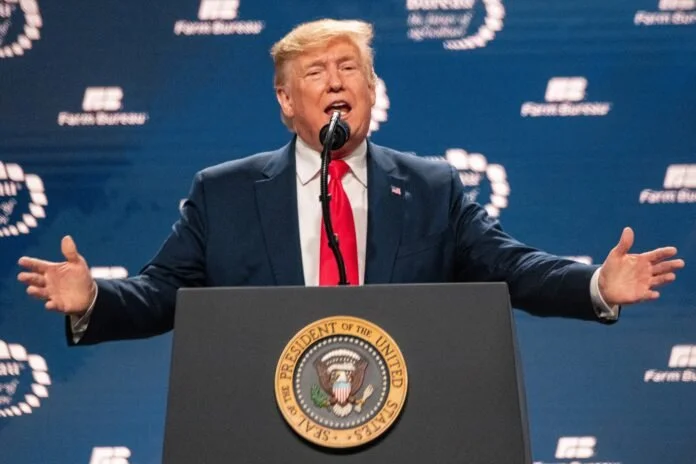
When Donald Trump first entered the White House in 2017, his "America First" project did not simply mark the return of nationalist rhetoric. It altered the geopolitical calculus. Within days of taking office, Trump withdrew the United States from the Trans-Pacific Partnership, a trade agreement designed to anchor Pacific economies, including several Latin American nations, to shared trade rules. The move signalled that Washington was no longer interested in shaping regional economic architecture, at least not through cooperation.
Meanwhile, the chants of "Build the Wall" were not heard as domestic theatrics in Latin America. They were read as hierarchical, an old story revisited. By 2018, scepticism toward Washington hardened, especially in Mexico and Central America. As climate commitments were rolled back and the U.S. exited the Paris Agreement, several governments began deepening ties with China and the European Union.
While Australia didn’t drive these changes, it was significantly impacted by them. Latin America, always vigilant to external political influence, found Australia's position in the U.S. alliance system increasingly significant in a time of growing suspicion towards Washington. As a result, Australia was judged less by its actions than by assumptions about its alignment.
This marked the beginning of Australia’s guilt by association.
The Problem of Being Too Close
Australia's foreign policy has, for decades, rested on the architecture of the U.S. alliance, from the ANZUS Treaty to consistent UN voting alignment. Most of the time, this is understood abroad as prudence. However, during the Trump years, it read differently, particularly in a region where sovereignty and non-intervention serve as core principles.
The turning point came in 2019, when Australia joined the United States, Canada, and several European states in recognising Juan Guaidó as the interim president of Venezuela. In Canberra, the decision was framed as supporting constitutional order. In Latin America, it was read by many as a Western-orchestrated power play. Mexico refused to endorse the move. Uruguay objected. Brazil, under President Bolsonaro at the time, supported it, but the broader regional mood leaned toward suspicion.
This mattered not only because of Venezuela. It shaped how Australia was understood in the region during the resurgence of left-progressive governments, the so-called second pink tide, in countries such as Mexico, Brazil, and Chile. Leaders like Presidents Andrés Manuel López Obrador, Lula da Silva, and Gabriel Boric emphasised autonomy, post-colonial sovereignty, and social dignity in their foreign policy. Australia, through its alignment with Washington, risked sounding out of tune.
The irony is that Australia had no interest in intervening in Latin American politics. But reputation is not built solely on intention; it is built on perception.
A Trade Pact Without Washington
Yet this is not a story of Australia being merely reactive. If anything, trade diplomacy demonstrated that Canberra could act independently even in the shadow of a dominant ally.
When Trump abandoned the TPP, the deal could have collapsed entirely. Instead, Australia led the effort to salvage and renegotiate it as the Comprehensive and Progressive Agreement for Trans-Pacific Partnership (CPTPP), signed in Santiago in 2018, without the United States. The pact now binds Australia together with Mexico, Peru, and Chile under one of the world's most advanced trade agreements, which includes labour standards, at a moment when global trade norms are under increasing strain. Crucially, the CPTPP has not remained static. The United Kingdom formally acceded in 2023, and several states have expressed strong interest in joining, including Costa Rica, Ecuador, and Uruguay, which have positioned accession as part of economic diversification strategies.
For Latin America, this was a different Australia: not a follower, but a convenor.
The Quiet Rebrand
By 2023, Canberra had begun a gradual transformation of its engagement with Latin America. This was not accomplished through flamboyant gestures, but through the diligent and methodical establishment of relationship infrastructure.
The Council on Australia–Latin America Relations (COALAR) became central to this transformation. Its 2024–27 Strategic Plan reoriented engagement away from traditional extractive-commercial ties toward collaboration in cultural entrepreneurship, renewable energy, education, and First Nations diplomacy. This is middle-power diplomacy by design: relationship-first diplomacy. Foreign Minister Penny Wong's rhetorical shift toward listening diplomacy, inclusion, and Indigenous knowledge made the shift clear. Where American foreign policy often speaks in the cadence of power, Australia began to speak in the tone of partnership.
In a region weary of being instructed, this made a difference.
Turning to the Green Future
The most significant development, however, has been in the politics of the energy transition. The global shift to renewables has made Latin America newly strategic, not for oil this time, but for lithium, hydrogen, and low-carbon innovation. In 2024–25, Australia widened cooperation with Chile and Argentina on joint supply-chain development, positioning itself not as a raw-materials customer but as a co-developer in the green industry.
This is not a cosmetic pivot. It signals that Australia is setting out an economic path not defined by the U.S.-China rivalry frame. It is a form of self-determination in the burgeoning clean energy industry, inspiring other nations to follow suit.
Where Washington debates fossil fuels and great-power rivalry, Australia and Latin America are talking about pricing, storage, grid integration and access.
The Soft Power That Stays
Even as geopolitics shifts, one diplomatic resource remains that quietly outperforms policy statements: people. Australia's soft power continues to resonate in Latin America, providing a reassuring constant in a changing world.
Enrolments of Latin American students in Australia continue to rise. Joint research in climate science, water governance, creative industries, and public health is expanding. The Latin American Film Festival, now in its twentieth year, remains one of DFAT's long-running cultural platforms, valued not for influence but for the welcome it receives.
This is how reputations move, through familiarity.
The Choice Now
Trump's return to the White House has revived the geopolitical conditions that once made Australia look like an extension of Washington. But this time, Canberra is not entering unprepared. It has begun to build an identity that is neither oppositional nor deferential, but distinct.
The question now is consistency. If Australia continues to cultivate climate cooperation, cultural exchange, and inclusive development partnerships, it can be understood in Latin America as a peer, not an echo.
If not, the old shadow returns. Either way, the region is watching. And this time, Australia gets to decide how it is seen.
Content Disclaimer
The views expressed in this article are those of the author and do not necessarily represent the views or opinions of the Australia Latam Emerging Leaders Dialogue.