[The author serves as Director of Diplomacy at the Australia Latam Emerging Leaders Dialogue. This article reflects her personal views and analysis in that capacity.]
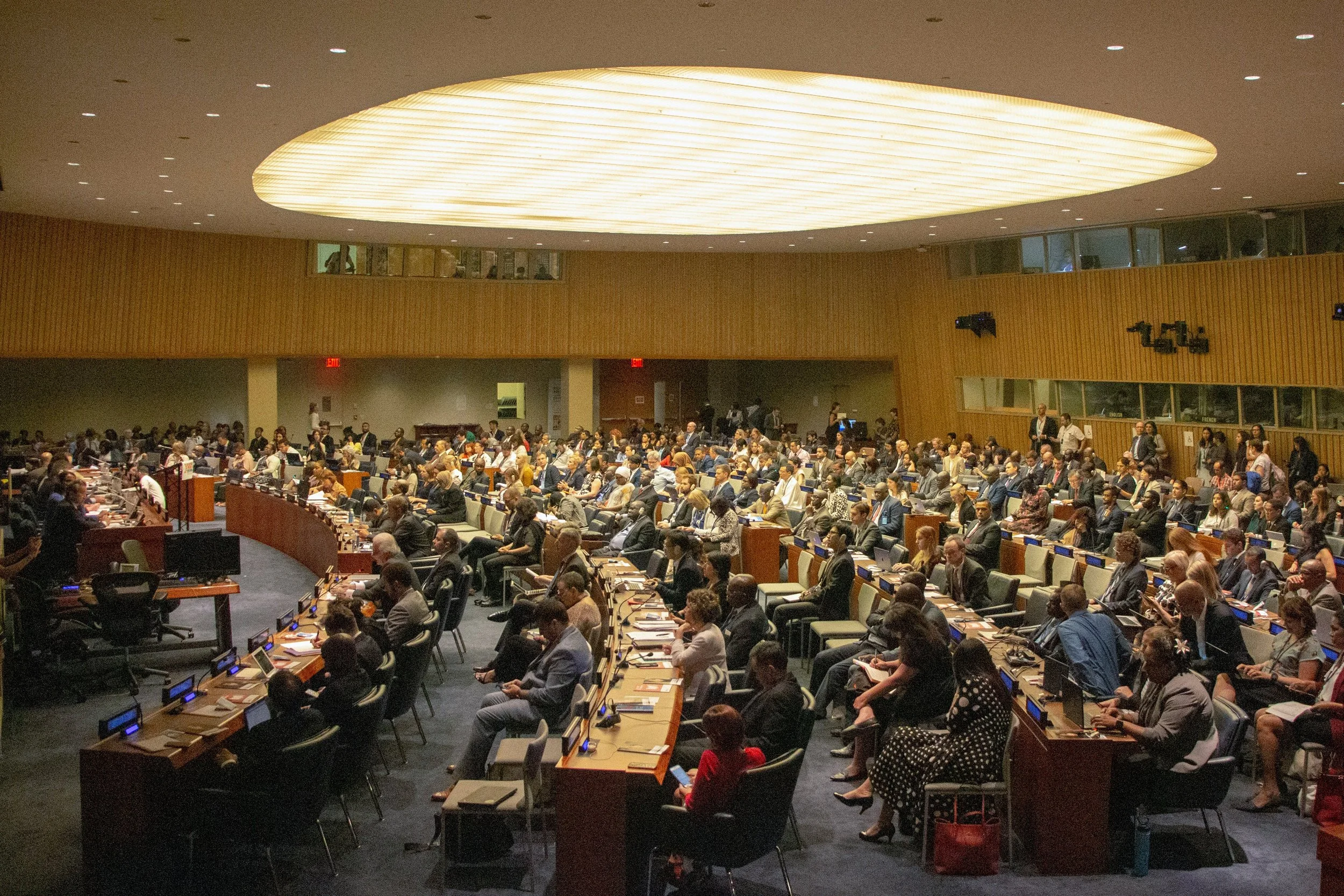
Photo by Matthew TenBruggencate on Unsplash
In July 2025, Argentina held bilateral talks with both India and the United States on space cooperation, within days of each other. One focused on satellite technology and scientific exchange. The other emphasised space operations, critical minerals, and regional security. Same country. Same domain. Completely different vocabulary.
This is not unusual. Across the Indo-Pacific and Latin America, space is now firmly on the diplomatic agenda, but conversations in different capitals are not, in any meaningful sense, the same conversation. The language being used, and the strategic assumptions embedded within, vary so sharply that they can make genuine cooperation harder than geography or politics alone.
The Problem with 'Peaceful Purposes'

Start with the foundational term in international space law. The 1967 Outer Space Treaty states that space shall be used for peaceful purposes, a principle that has shaped the domain for nearly six decades. Yet as legal analysts have noted, the Treaty contains no generalised prohibition on military activity in orbit. The restriction on 'exclusively peaceful purposes' applies to celestial bodies like the Moon, not to Earth orbit, where most strategic assets sit.
The result is a foundational term that different actors interpret in diametrically opposed ways. For some, 'peaceful purposes' means non-aggressive. For others, it implies non-military. The Belfer Centre has argued that existing treaty language requires reinterpretation to address the realities of dual-use technology, meaning satellites that serve both civilian and defence functions simultaneously. Without a shared definition, countries negotiating cooperation agreements are often not negotiating from the same premise.
Australia Speaks One Language; Latin America Speaks Another
Australia's approach to space is framed primarily through sovereignty and security. The 2023 Defence Strategic Review explicitly identifies space access as vital to national defence. Researchers and strategists in Canberra focus on sovereign launch capability, assured access, and strategic resilience. The United States Studies Centre has warned that Australia lags behind its Quad peers in space investment, a concern framed squarely in alliance and deterrence terms.
Latin American nations, by contrast, have historically approached space through a development lens. The long-running China-Brazil Earth Resources Satellites programme is often presented as a model of South-South cooperation. Now more than four decades old and expanding into deep space, it is valued for what it delivers in environmental monitoring, digital inclusion, and regional scientific capacity. When Brazil's telecommunications regulator issues licences to international satellite operators, the stated goal is reducing digital inequality. The strategic vocabulary is centered on access and development, not deterrence and denial.
This is not a criticism of either approach; both are legitimate. But when Australian and Latin American counterparts sit down to discuss space cooperation, they often find themselves using the same words differently, or different words to describe the same interest. 'Sovereign capability' is understood as a defence concept in Canberra. In Bogota or Lima, it may read as exactly the kind of great-power framing that smaller space nations have spent decades resisting.
Who Writes the Glossary Writes the Rules
The stakes of this linguistic divide are higher than they might first appear. The rules governing space are still being written. Norms around debris mitigation, orbital slot access, responsible behaviour in space, and the commercialisation of lunar resources are all in active negotiation at the United Nations and in bilateral frameworks. The countries that arrive at those discussions with a shared vocabulary, having already agreed on what terms mean, will help shape the outcomes. Those that arrive speaking past each other will not.
China understood this early. The 2024 China-Latin America and Caribbean States Space Cooperation Forum in Wuhan was not just a diplomatic gathering. It was an exercise in norm-setting, anchoring a framework of South-South cooperation, mutual benefit, and development-oriented space activity across a region that now includes dozens of emerging space nations. The language China deployed "community of shared future, equal partnership, socio-economic development” was chosen deliberately, and it resonates differently in Latin America than the alliance-based framing more common in Washington or Canberra.
Australia has the relationships, the geography, and the credibility to offer an alternative framework. But doing so requires more than good intentions. It requires speaking in terms that resonate with partners whose space ambitions are real, whose development priorities are legitimate, and whose historical experience gives them reason to be cautious of language that resembles strategic competition dressed as diplomacy.
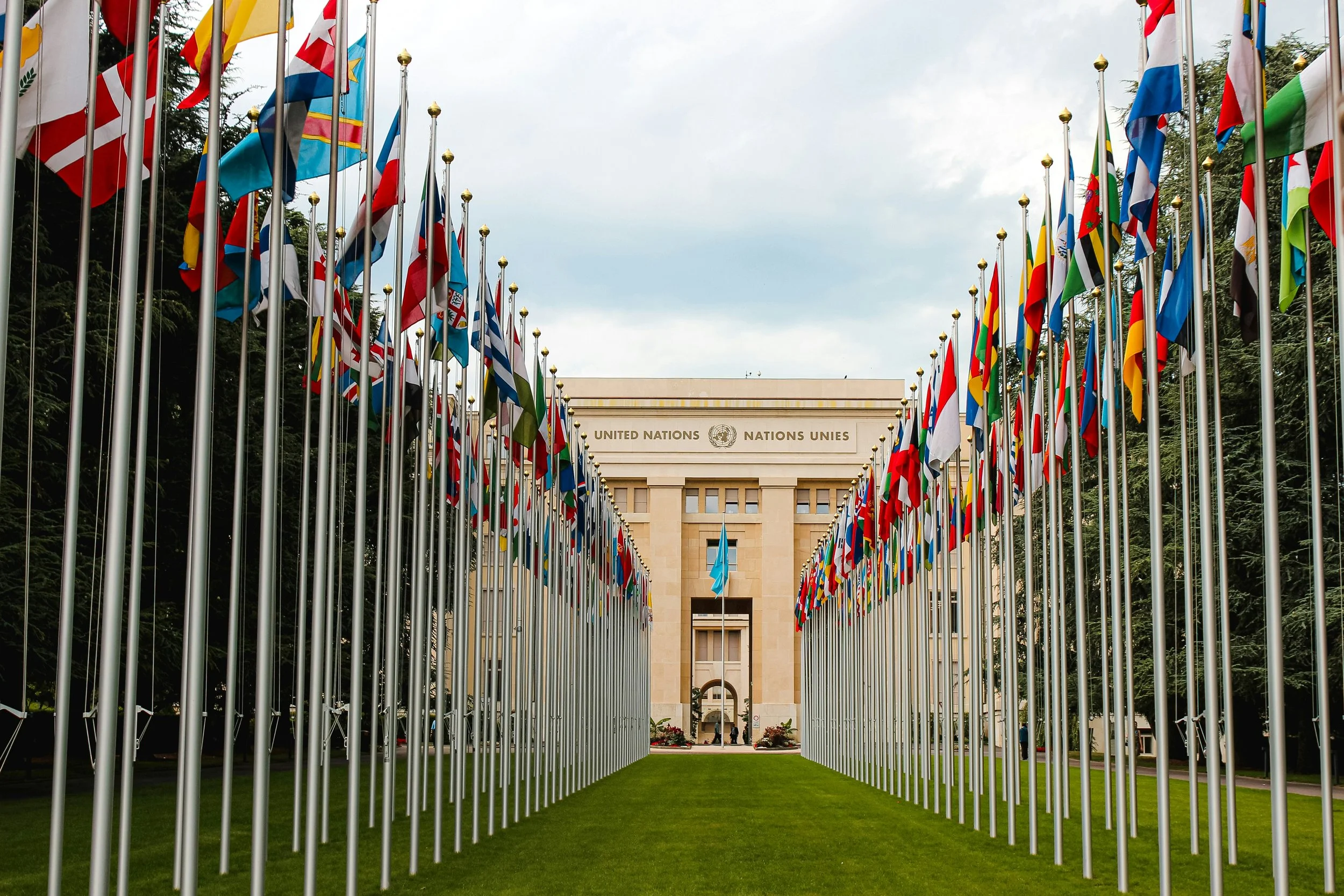
Photo by Mathias Reding on Unsplash
Where Emerging Leaders Come In
This is precisely where the next generation of Australian and Latin American leaders has a role to play that senior officials, constrained by existing frameworks, often cannot.
Emerging leaders can build the human relationships that formal diplomacy depends on: the relationships, the mutual comprehension, the trust that allows difficult conversations to happen before they become crises. They can learn each other's space vocabulary not simply as a translation exercise, but as a genuine effort to understand what different communities value and why.
Space is too important, and the window for shaping its governance too narrow, to leave this work to chance. If Australia and Latin America are to be genuine partners in the space age, that partnership needs to be built by people who have taken the time to understand each other's strategic vocabulary, not just each other's bilateral agendas. ALELD is here to help ensure that when Australia and Latin America meet to shape space governance, they are genuinely speaking the same language.
BIO: Geraldine Olea is the Director of Diplomacy at the Australia Latam Emerging Leaders Dialogue. As the founder of Olea Pacific Advisory and Academy Olea, she advises Asia-Pacific space and sovereign technology organisations on Australian market entry while coaching non-technical professionals into careers in tech. Her cross-sector background spans government, technology, and the commercial space sector. She holds multiple certifications from the United Nations Office for Outer Space Affairs and has completed the International Space University's Tracks to Space program. Her writing on business strategy, career development, and professional multiplicity has appeared in The Diplomat Diary (Young Diplomats Society), Entrepreneur.com, The Daily Telegraph, SmartCompany, and Women's Agenda. An active thought leader on space economy and sovereign capability, she operates professionally in English, Spanish, and Portuguese.
Content Disclaimer
The views expressed in this article are those of the author and do not necessarily represent the views or opinions of the Australia Latam Emerging Leaders Dialogue.